
In our last blog, we looked at how storms affect wind turbines and their blades, and how it causes Leading Edge Erosion (LEE). A recent scientific paper by Sandua-Fernández, Aparicio-Sanchez, Cantero-Nouqueret, and Eguinoa picks up where our last blog left off, examining how LEE changes the design effectiveness of static wake steering when wind turbines blades are eroded.
The study investigates not only how erosion impacts the performance of individual wind turbines, but also how wind farms should be controlled to maximize power generation. Because LEE affects both power production and thrust force, it changes the wake produced by a wind turbine. Those changes matter, since they directly influence the wind conditions experienced by downstream turbines.
The researchers modeled turbines with varying degrees of erosion, analyzing their performance both alone, and as part of a wind farm using static flow control strategies, such as wake steering.
In the referenced study, the researchers applied their analyses to a standard wind farm case known as the TotalControl Reference Wind Power Plant, which serves as a benchmark in flow control and wake steering research. This reference case includes the typical layout of turbines and operational conditions representative of real wind farms, and it is used in numerical simulations to evaluate how LEE and control strategies affect overall farm performance.
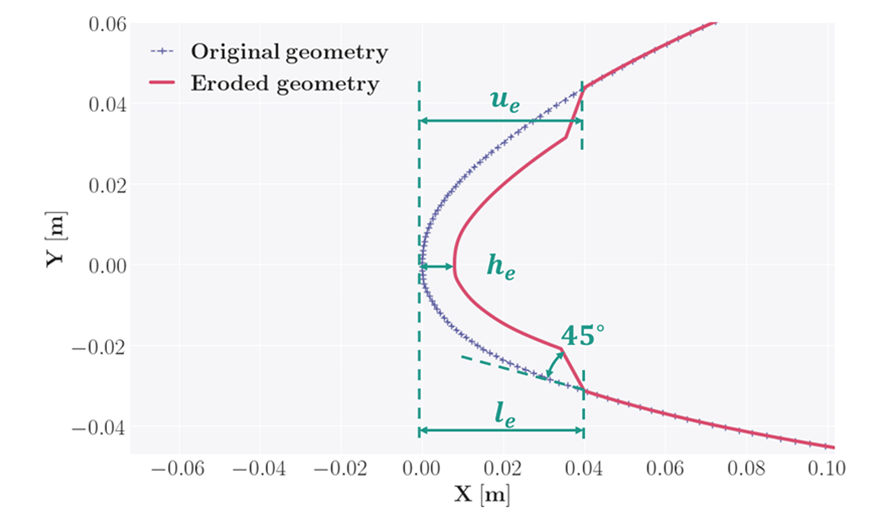
Figure 1. Erosion categories definition
Their findings suggest that while LEE does reduce the power output of individual turbines, the overall effectiveness of wake steering control strategies remains largely unchanged as long as erosion levels are fairly consistent across turbines.
In other words, even though eroded blades generate less power and slightly weaker wakes, static wake steering still offers similar relative benefits in terms of overall farm output when compared to a farm with pristine blades.
The most significant impact occurs when erosion varies significantly between turbines, which can shift optimal control settings and influence wake interactions.
Understanding how environmental wear like LEE interacts with wind farm control strategies helps operators make better decisions about maintenance, control system design, and long-term energy planning.
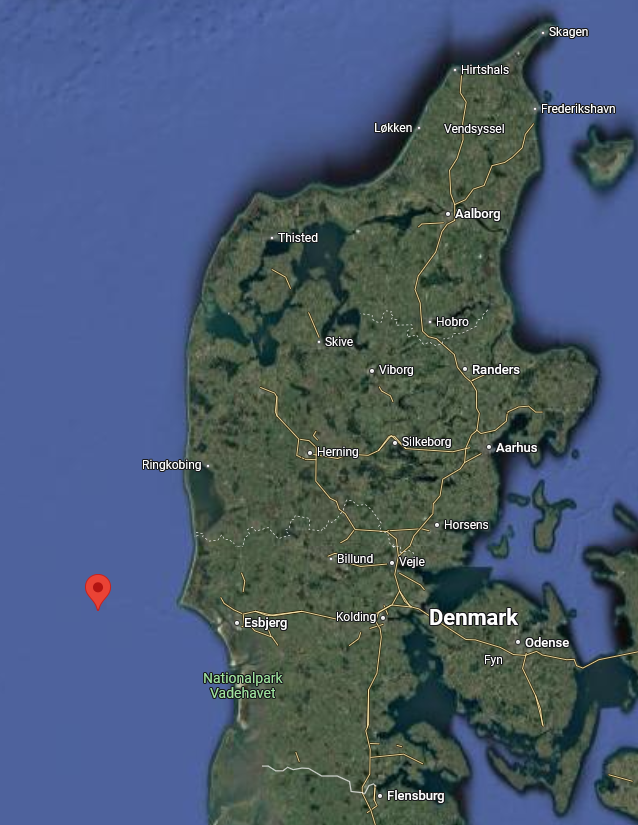
Figure 2. Wind farm location
Building on these findings, the AIRE Project is working to ensure that effects like LEE are properly accounted for in wind farm design and operation under real climate conditions. Rather than assuming ideal, clean blades, AIRE focuses on linking blade degradation caused by rain, storms, and airborne particles to changes in aerodynamic performance, wake behavior, and control effectiveness.
By improving how erosion-related performance losses are represented in predictive models, AIRE helps reduce uncertainty in energy yield estimates and control strategy planning over a turbine’s lifetime. High-fidelity simulations and blade damage evolution models connect real weather data with turbine operation, supporting more resilient wind farm layouts, smarter control strategies, and better-informed maintenance decisions in harsh and highly variable environments.
For the full publication, you can access it here.
Author: Grant Carlson
Editor: Iñaki Sandua-Fernández
February, 2026

